Sunday, April 29, 2018

Environmentalists are not hypocrites

The other day, I read an article in the Christian Science Monitor that really ticked me off. Provocatively titled "Are environmentalists hypocrites?", it points out that wealthy people and wealthy nations are more likely to profess concern about the environment and favor laws to protect it—but they also consume more, thereby causing more damage to the environment. So basically, the argument goes, anyone who claims to be an environmentalist is too busy focusing on the mote in their neighbor's eye to deal with the log in their own.

Now, the article goes on to point out that it's really a misconception that poorer folks, and poorer nations, aren't concerned about the environment. They spend less energy focusing on environmental issues, sure, but they spend less energy on all types of political issues, because they're spending a lot more on just trying to survive. It notes that people in India and Latin America are more worried about global warming than people in "developed nations"—which makes sense, since they'll suffer much more as a result of rising sea levels. Likewise, in the United States, lower-income voters are most concerned about issues like water—which also makes sense, because guess where the water supply is most likely to be unsafe?

But nonetheless, the central "conundrum" remains: rich environmentalists cause more environmental problems than non-environmentalists. Except...do we, really?

Consider the opening paragraph of the article:
A common charge against environmentalists is that they’re hypocrites. They tell us to reduce our carbon emissions, the typical argument goes, yet they fly planes all over the world. They condemn Big Macs, yet they buy raspberries imported from a different hemisphere. They sneer at our plastic shopping bags, yet every year they buy a new iPhone.
Well, maybe I'm not exactly a typical environmentalist, but the last time I took an airplane anywhere was to my grandmother's funeral in Florida seven years ago. I don't buy imported raspberries; I grow my own, which is considerably cheaper as well as more eco-friendly. And as a late adopter, I've never even owned an iPhone—or any smartphone at all. And I make all these choices, at least in part, because I'm an environmentalist, and I want to live my live in a way that causes as little harm as possible.

I think the biggest problem with this "environmentalists damage the environment" problem is that it's comparing apples to imported bananas. It's true, as I determined back in 2011, that I have a bigger ecological footprint than a fictional character living in Botswana, but that's not because her lifestyle is more eco-friendly than mine; it's because the Ecological Footprint Calculator also factors in "societal impacts," such as roads and public services. Compared to other Americans, my footprint is considerably smaller than average. The recently retooled calculator puts my personal footprint at 1.6 Earths, while the average American's is a whopping 5 Earths. (In fact, according to the calculator, I'm even doing better now than the average person in South Africa or Brazil.)

So yes, Americans are more likely to be environmentalists than, say, Brazilians. And yes, Americans also consume more, on average, than Brazilians do. But it's a logical fallacy to conclude from this that environmentalists consume more than non-environmentalists. American environmentalists consume less than Americans who aren't environmentalists, and Brazilians who aren't environmentalists consume more than Brazilians who are (and, if the Footprint Calculator is to be believed, more than some Americans who are, as well). Compared to their peers, environmentalists consume less—even if they're richer.

It may seem like I'm undercutting the whole concept of ecofrugality with this argument, since the whole point of it is that if you consume less to save money, you will automatically live a greener life (and vice versa). Surely this implies that poor people are greener by default.

But here's the thing: there's no rule that, as you make more money, you must consume more. You can have plenty of money in the bank and still wear thrift-shop clothes, walk or bike to work, and eat low on the food chain. Plus, you can afford to make the few green choices that actually do cost you more money, like eating organic, as well as the ones that cost you money up front but save money in the long run, like using LED bulbs. And this, at least in my experience, is exactly what environmentalists typically do as their wealth increases.

In fact, because ecofrugality cuts both ways, there's a case to be made that being an environmentalist can actually make you wealthy. Think about it: if you care about the environment, you'll choose to consume less in a variety of ways (drive less, eat less meat, use less electricity, etc.). Because you're consuming less, you'll also save money. And the more money you save, the richer you'll become.

Maybe for Earth Day 2019, we should forget all about focusing on a specific issue, like plastic use or renewable energy. If we really want to get as many people involved as possible, our theme should be, "Save the Earth and get rich!"

Saturday, April 28, 2018

Money Crashers: Two new articles

Just a quick update here to let you know about my two latest articles on Money Crashers. Neither of them has a lot to do with ecofrugality, but they might be useful for some of you.

The first deals with the topic of online romance scams. Researching this article came as a shock to me: I knew there were some scummy guys out there (most of the criminals are guys) using dating sites to get money out of women (most of the victims are women), but I had no idea of the scope of the problem. There are guys in Nigeria who have dozens of women on the hook at once and live like kings on the money they squeeze out of them. In 2016, Americans lost over $230 million to these scams—and that's just the ones that were actually reported. A lot of victims are too embarrassed and emotionally devastated to report the crime.

The money isn't even the worst part; it's the emotional harm these scams do. When the victims finally learn that what they thought was true love was just a money-making scheme, their lives fall apart. Some of them refuse to believe the person they loved isn't real and start stalking the guys whose images were stolen for the profile. Others become depressed to the point of suicide. Some are so desperate to believe their love was real that they actually stay involved with the scammers, sometimes even aiding them in committing other crimes.

So basically, this is a big deal, and anyone who ever dates online needs to know about it. My article covers how online romance scams work, their many dangers, how to identify a scam, and what to do if you've been a victim.

How to Avoid and Protect Yourself From Online Dating & Romance Scams

My other new article is about personal loans. I've already written about payday loans and their dangers, but this is about longer-term personal loans you can get from a bank. I explain how personal loans differ from other forms of credit, discuss why you might use one and where to get one, outline their pros and cons, and discuss some alternatives for raising cash. Then I conclude by talking about how to get a good deal on a personal loan if you decide to use one.

Sunday, April 22, 2018

The last (single-use) straw?

Since Earth Day fell on a Sunday this year, we were able to celebrate it by going to our town's annual Earth Day event, always held on the nearest Sunday at the environmental center. The theme this year was water, so in addition to the usual stuff—music, food, booths providing information about beekeeping and bike lanes and native plants—there were all kinds of displays about water conservation and pollution, especially from "microplastics." And one particular form of plastic waste a lot of them seemed to have their eye on was a ubiquitous item that, unlike many single-use plastic items, can't be recycled: drinking straws.

One enthusiastic volunteer buttonholed me and loaded me up with three separate fliers and a paper drinking straw, which she described as "much better" than a plastic straw. Now, I happened to know that paper was once the standard material for drinking straws, but I'd never actually encountered one before; when I asked the volunteer where you could buy them, she didn't know. Another booth was passing out leaflets with statistics about plastic use and suggestions for eliminating plastic waste from your daily life, and alongside the usual recommendations you see all the time (tote bags, mesh produce bags, reusable water bottles) it suggested "metal straws/reusable straws" as an alternative to single-use plastic straws. Once again, I asked the kid at the booth where it was possible to find these, and he suggested Target—which came as a surprise to me, since I don't think of that as a store that's high on sustainability.

But when I got home, I searched the Target site for "reusable straws," and I did indeed find a couple of of products. These Bubba Plastic Reusable Straws ($4 for a set of 5) are made of durable silicone and have a wider diameter (like the ones you get with a cup of bubble tea) to make them easier to clean. The similar Silikids straws ($6 for a pack of 6) have similar construction, but come in varied lengths to accommodate cups of different sizes. (Incidentally, I also found some of the paper straws here and discovered why they're no longer popular: they're much, much more expensive than the plastic ones. Paper straws cost around $3 for a pack of 20, while plastic ones were only $1 for a pack of 100.)

So, as an ecofrugal person who enjoys an occasional Frappuccino, I should definitely go out and invest in a set of these reusable silicone straws, right? Well, maybe, but there are a couple of things that give me pause. For one thing, although I have certainly used my share of plastic drinking straws in my time, I've never actually bought any. They always come into my possession when I buy a cold drink while out and about, and there's no way to drink it without a straw. So what I invariably do is take a straw, then take it home, rinse it thoroughly (holding it directly under the faucet so the water flows straight through it), and reuse it. In the top section of one of our kitchen drawers, we have a whole assortment of drinking straws in various sizes and colors: green ones from Starbucks, orange-and-red striped ones from Dunkin Donuts, translucent ones from Quik Check, and a few big fat ones from places that sell bubble tea. Whenever I need a straw at home, I just grab one of these, and when I'm done with it I attempt to rinse it and reuse it yet again. I can get at least a few uses out of each one before it becomes too battered to clean properly.

Thus, keeping a set of reusable straws in a drawer at home wouldn't actually do very much to reduce my disposable-straw use. For them to do me any good, I'd actually have to carry one around in my purse, so that I'd have it with me whenever I happened to get the urge to stop somewhere for a cold drink. But that raises a new set of questions:
  • How would I carry it in my purse? If I leave it floating around loose in there, it won't be very clean when I want to use it. Would it fit in the little the pocket designed to hold pens? Or could I wrap it up in something?
  • Would these wider straws fit through the plastic lids on a standard disposable drink cup? If not, they'd be impractical for use with the iced drinks at Dunkin Donuts (though they'd still fit through the wider, domed lid of a Frappiccino).
  • Conversely, would they be wide enough to accommodate the tapioca "bubbles" in a cup of bubble tea? (At least one reviewer at Target says the quarter-inch Bubba straws are not.)
  • Could I get the used straws home to clean them without making a mess? It works okay with the narrower plastic straws, but would the wider openings on these silicone ones be more inclined to drip?
  • Finally, what would I do with my current collection of plastic straws? Just throw them out? Or save them in case we ever need one to fix a leaking toilet chain?  
This final question made it clear that, even if I do eventually decide to invest in a reusable straw, it clearly makes sense to use up my assortment of plastic ones first. There's nothing ecofrugal about throwing them away and buying something new to take their place. So the most logical thing to do in the short term, I concluded, would be to take one of these old plastic ones and stash that in my purse, ready to use if I need it. As a bonus, doing this will help me figure out the best possible way to tote around a drinking straw, so if I finally run through my collection of old straws and need to buy one, I'll already know the best way to carry it.

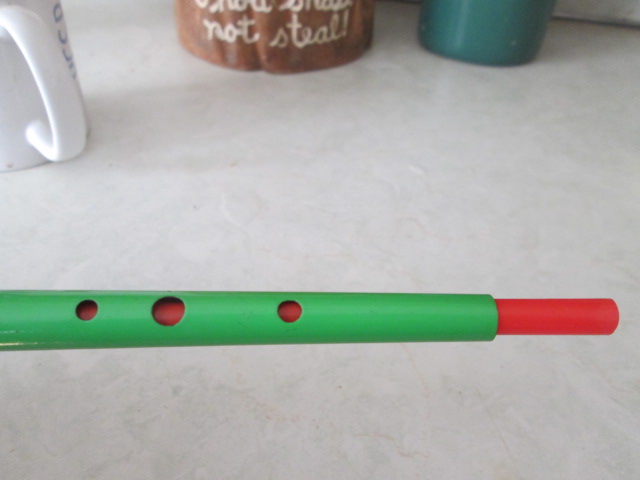
When I tried this, I found that a regular-length drinking straw is, in fact, too long to fit in my purse's pen pocket, so for now I've improvised a case for it from—I kid you not—a pennywhistle. The whistle fits neatly in the bottom of the purse, and it will protect the straw from getting crushed. It takes a bit of shaking to get the straw loose from the whistle, but it can be done. Now I just have to remember, next time I stop for a drink, that it's there.

Of course, this solution won't work if I eventually get one of the silicone straws, since the whistle is too narrow to hold those. But at least it will serve as a proof of concept.

Thursday, April 19, 2018

Money Crashers: 7 Types of Financial Professionals and When You Need to Hire Them

In the past, Brian and I have never relied that much on other people to handle our finances. We hired an accountant once to do our taxes, the year we were married, because our situation was particularly complicated that year, but when we got the $300 bill for her services, we decided I'd just handle that job myself from then on. And we hired a lawyer to help us buy our house, because you pretty much have to have one to scrutinize those complicated contracts, but that's the only time we've ever used one. I've handled most of our investments myself, setting up a plan that automatically pulled money out of our online savings account and putting it into a few different ETFs (as suggested by Andrew Tobias in The Only Investment Guide You'll Ever Need), so it required almost no work on my part. I did have an investment advisor handling my IRA at Morgan Stanley, but I had also opened a second IRA on Capital One Investing, since I found it much easier to be able to fund my account for the year with a few clicks of the mouse than have to call someone else to do it.

Recently, though, as we started drawing nearer to our goal of financial independence, I began wondering how I was going to go about switching over all our money from the investments we had now, which were set up for long-term growth, to new ones that would instead bring in a steady income that we could live on if we had to. Up until now, everything had been automatic, but this was going to take a lot more work, and I wasn't looking forward to it. And while I was thinking about that,
Capital One announced that it would be dumping its online investment platform and moving all our accounts over to E*TRADE—so I'd also need to learn a new system, and the automatic withdrawals I'd set up might not work so smoothly anymore.

And in the middle of all this, my finance guy from Morgan Stanley called me up and asked if I'd consider switching over my Capital One IRA to him—and maybe our joint investment account as well. He met with us and showed us some funds he'd picked out that looked like just what we needed—most of which I didn't have access to in my online account. Brian and I discussed it, and we decided that even paying 0.75% off the top to this guy, we could probably do better than we would with me trying to fumble my way through on my own—and it would be a lot less work for me. So now we have one financial professional we deal with regularly, and everything else I take care of myself.

All of which kind of illustrates the point of my latest Money Crashers article: some financial tasks make sense to do on your own, and for others, it's best to hire a pro. And which ones are which really depend on your personal situation. So, in the article, I offer a rundown of the different types of financial professionals, from accountant to "money coach," explaining what each one does and how to decide when it makes sense to hire one.

Check it out here: 7 Types of Financial Professionals and When You Need to Hire Them

Saturday, April 14, 2018

Recipe of the Month: Aloo Gobi

Apologies for skipping my regular blog entry last week. It was a pretty busy weekend, with lots of activities (mostly gaming-related), and I discovered on Sunday that the post I was planning to do—a Recipe of the Month based on sweet potato noodles—was basically the same thing I'd posted as my Recipe of the Month last April. So I decided to just put up a post about my new Money Crashers article and let it go at that.

But now, I have an actual, legitimate Recipe of the Month to post. Last week, on a trip to the H-Mart, we decided on a whim to pick up some cauliflower that was selling cheap—even though we had no specific idea what to do with it. As the week progressed, Brian realized he'd have to come up with some way to use it, so he dug out a cookbook we seldom use called Heart Smart Flavours of India and turned to the recipe it calls "Aaloo Gobi," or cauliflower and potatoes (which is more commonly spelled as "aloo gobi," with just one "a"). We actually had nearly everything that it called for on hand, including a complex spice blend called Sabzi Masala, which Brian had mixed up over a year ago for another recipe and hadn't used since. (It also called for a much simpler blend called Dhania-jeera Masala, but since that contains nothing but cumin and coriander, it was easy to mix up on the spot.)

Anyway, as we were eating it, Brian noted that he'd actually never made this particular dish before. He'd made the "Aaloo Mattar" (potatoes and peas) on the facing page, but since we're not normally in the habit of buying cauliflower, this was the first time he'd done the aloo gobi. So, since this was definitely a vegetable-based recipe—in fact, containing pretty much nothing but vegetables and various seasonings—I decided it would do just fine as a Recipe of the Month.

There are many versions of aloo gobi, and the only ingredients all of them have in common are the potatoes and cauliflower. This version also called for onions, tomatoes, green chilis (which we didn't have, so Brian substituted a bit of diced bell pepper and a touch of cayenne), garlic, ginger, turmeric, the Dhania-jeera Masala and Sabzi Masala spice blends, salt, and chopped scallions for garnish. It made a very colorful dish, bright yellow from the turmeric with touches of red from the tomatoes and peppers. It was quite flavorful, too, with all those spices going on. And since we had the complicated spice blend prepared ahead of time, it wasn't all that hard to make.

Its only weakness was that, with nothing much in it but veggies, it wasn't all that filling. The recipe suggested serving it with a bread of some kind, either parathas or chapatis, and adding that probably would have made a much heartier meal—but it would also have taken a lot more time to cook, and we figured that with the potatoes in there, it should have enough starch by itself. However, with only two potatoes to a whole head of cauliflower, it actually wasn't that substantial. So if we make it again, we'll probably either do it on a night when we have time to make bread also or simply serve it over rice.

But will we make it again? Well, I guess it depends. Cauliflower isn't a veggie that we grow, and it's not one we're normally in the habit of buying—but that's mainly because (1) it's a little pricey, especially when out of season, and (2) by itself, it's not very interesting. However, when combined with potato, tomato, and lots of different Indian spices, it's very interesting. And the dish also has the advantage of being both vegan and gluten-free, which means it's something we can serve to pretty much anyone who ever comes over to dinner.

So I'm thinking this dish isn't something we'll make all that often, but it will be handy to keep on hand, sort of in our back pocket. That way, any time we spot a great deal on cauliflower again, we'll know of something to do with it aside from just blending it up in macaroni and cheese. And, should we ever need to feed some vegan and/or gluten-free friends, we'll have one more dish on our list that will work for them.

Money Crashers: Net Neutrality Explained

It's been about five years now since Brian and I got fed up with Verizon (after they'd screwed us not once but twice) and switched over all our services—phone, Internet, and for a while at least, cable TV—to Cablevision. Since then, I've been tempted repeatedly by the offers we keep getting from Verizon saying they can offer us all three services—including faster and more reliable Internet—at a significantly lower price than we're paying now.

For a while I was holding out against them on the grounds that based on our past experiences, we had no reason to believe Verizon could actually deliver on its promises—but then several things happened to shake my confidence. First, a Verizon rep rang our doorbell and started trying to sell me on their new FiOS service, going so far as to point out the actual cable that carried the signal. Second, our Cablevision Internet connection started to become a little wonky, cutting out at unexpected times. And third, I saw several survey showing that of all the ISPs available in our state, Verizon actually had the best ratings for customer service, which suggested that they had actually "upgraded their customer service" just as the rep had claimed.

However, just as I was on the point of giving in and making the switch, the Trump administration started making noises about scrapping the 2015 Open Internet Rule (as it eventually did in November 2017, though the change doesn't take effect for another couple of weeks). At that time, there were reports that multiple ISPs were actively lobbying the administration to make the change—and when I checked, Verizon's name was right there on the list. That got me so hopping mad that I decided, screw it, I was willing to pay an extra few hundred bucks a year to support a company that wasn't actively working to destroy the Internet as we know it.

So, the next time a couple of Verizon reps showed up at my door, I politely but firmly said I wasn't interested in ever having service with Verizon. And when they asked why, as I had expected they would, I was happy to explain that it was because of the company's stance on net neutrality. What I wasn't expecting was for their next question to be, "What's that?"

This forced me to think as best as I could on my feet to explain what net neutrality means in just a couple of sentences. I think it came out something like, "Well, it means that the people who own the pipes that deliver your Internet service can't control what you see online by blocking certain sites or making you pay extra for them. And right now there are laws that say they can't do that, and Verizon is working to get those laws changed." Which wasn't bad for an off-the-cuff response, and clearly came as news to the two students who were shilling for Verizon—but it got me thinking that apparently there are a lot of people who really understand this issue, and a more complete and coherent explanation might be handy for them.

So in my latest Money Crashers article, I've attempted to provide this. As clearly and succinctly as I could manage, I explain what net neutrality means, give some examples of what can happen when there are no rules to protect it, outline the changes in net neutrality law over the past few years, and explain how the new rules to "restore Internet freedom" could affect us all: how we pay for Internet service, what content we're able to view online, and what products and services will never get off the ground because they can't afford to pay for access to the new Internet "fast lane." Then I wrap up with some discussion of how the fight over net neutrality is being continued at the federal, state, and local level, and what you can do to get involved.

So if you don't feel like you quite understand net neutrality—or if you do understand it but aren't sure what you can do to protect it—this article is for you: Net Neutrality Explained – What It Is and Why Internet Regulation Matters

Money Crashers: 6 Ways to Build Credit Without a Credit Card

When I first arrived at college, over (gosh) 25 years ago now, there were a lot of vendors offering products and services to the incoming students—including credit cards. I smugly bypassed those, telling myself that I was too smart to get lured into that trap. I assumed, probably correctly, that having a credit card when you don't have a steady source of income is a good way to get in over your head with spending and graduate with a lot of debt.

However, I also knew that I probably would eventually need a credit card after I graduated, and that I'd have to build up a credit rating somehow to get one. I'd heard that a good way to do this was to have a regular bill, such as a phone bill, and pay it on time every month. So, for the next four years, I made a point of getting the phone line in all the dorms where I lived set up in my name and paying the bill promptly and fully.

Imagine my surprise, then, when I applied for my first credit card after graduation and was told that I didn't qualify because I had no credit history. What I hadn't realized was that bills like a phone bill aren't always reported to the credit bureaus; you have to call up the providers specially and ask them to report the payments. All my careful planning had been wasted, and I had to ask my dad to co-sign for a credit card with me so I could start building some credit in my own name.

This story came back to mind recently when I read about how a majority of Millennials—about two out of three—are opting to go without credit cards completely. That's easier to do nowadays, since it's possible to pay for stuff with debit cards and payment apps instead—but it also means these cautious Millennials are in the same position I was after college. Since they've never used credit, they have no credit history, and when they finally need to borrow money—say, to buy a house—they'll have trouble doing it.

So my latest Money Crashers article is all about strategies for building credit without having a credit card. It covers the method I tried to use in college (and explains how to do it right), as well as newer methods like using an alternative credit service, reporting your rent, or paying off student loans (which all too many graduating students have).

Read it here: 6 Ways to Build Credit Without a Credit Card